
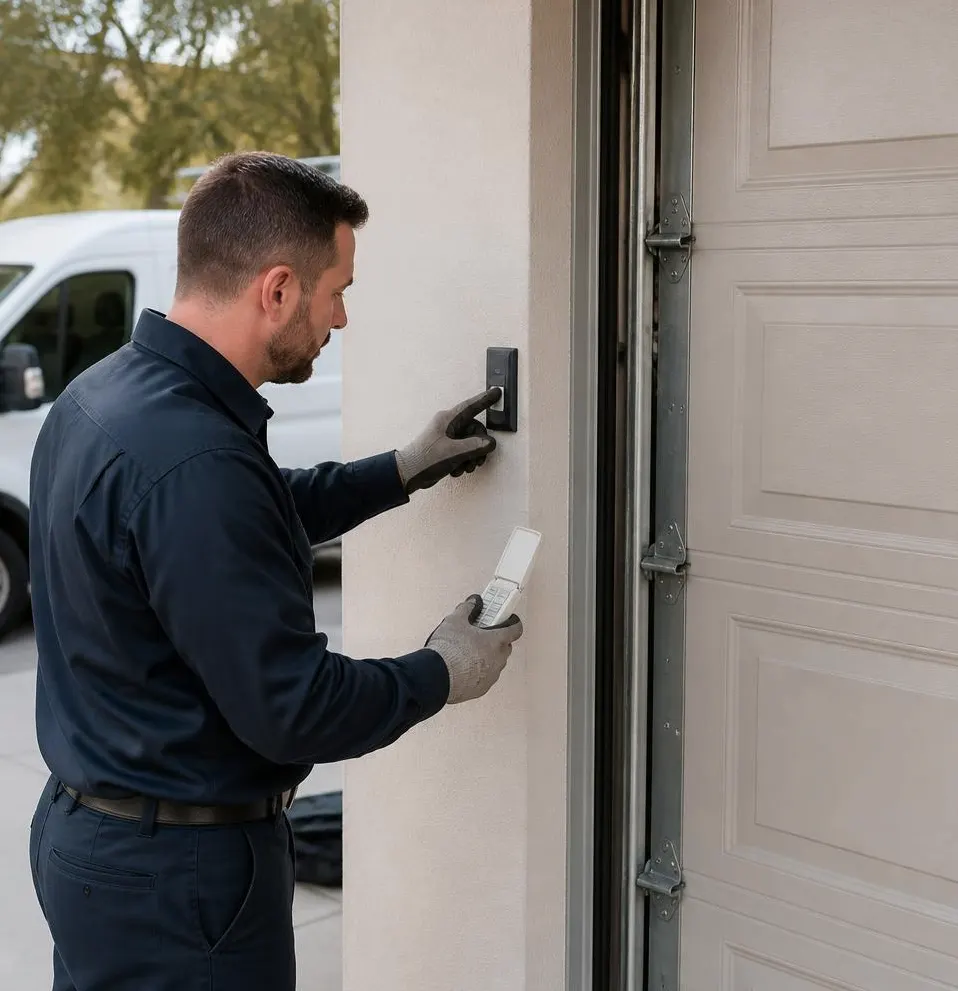
What a Tech Sees on This Kind of Call
It usually starts with a text from a tenant: the spring snapped, the door won't budge, and nobody knows who's supposed to pay for the service call. By the time we get there, the homeowner and the renter have usually already gone back and forth once or twice about whose job this is. Half the time the opener is original to the house, the springs are rusted from years of humidity, and the only reason it finally broke is that nobody looked at it since move-in. Most of these arguments aren't about the money — they're about not having anything in writing to settle it.
The General Rule of Thumb
Lease language varies, so this isn't legal advice, but most rental agreements follow a common-sense split: the landlord covers the structural and mechanical systems that come with the property — the door itself, the opener, the springs, the tracks — the same way they'd cover a water heater or an HVAC unit. Wear and tear from age, weather, or normal use falls on the owner. Tenants are typically on the hook for damage caused by misuse: backing a car into the door, forcing it closed when it's off track, letting kids hang on the bottom panel, or ignoring a problem until it gets worse.
Breaking It Down by Part
- Springs: These wear out from cycle count and age, not from anything a tenant did. Landlord's bill, almost always.
- Opener: If it's failing from age or a power surge, that's on the owner. If someone yanked the emergency release repeatedly or jammed something in the track, that's tenant territory.
- Cables and tracks: Rust and fraying from humidity are a maintenance issue, not a tenant issue. A door forced through a bent track after someone backed into it is different.
- Panels: Storm damage or impact from a vehicle is the kind of thing renters' insurance or an incident report should cover, depending on who caused it.
- Remotes and keypads: Dead batteries are on whoever's using them day to day — that's a tenant task, not a service call.
What to Inspect at Move-In
A five-minute check before you sign saves a lot of arguing later. Walk through this with the landlord or property manager present if you can:
- Open and close the door manually (disconnect the opener first) to feel for resistance, grinding, or uneven movement.
- Look at the springs above the door for visible rust, gaps in the coils, or flaking.
- Check the cables on both sides for fraying or looseness.
- Test the opener's auto-reverse by placing a 2x4 flat on the ground under the door — it should reverse on contact every time.
- Check the bottom weather seal and panels for cracking, warping, or water staining, which show up fast here given the humidity and afternoon downpours.
- Photograph everything with a timestamp and send it to the landlord in writing. This is the single most useful thing either party can do.
Why the Local Climate Makes This Matter More
In this part of Florida, garage doors and their hardware age faster than people expect. Humidity swells wood panels and promotes rust on springs and cables, hurricane-season wind loads stress tracks and panels that are already weakened, and afternoon storms push water under doors with worn seals. A door that looked fine at move-in in the dry season can show problems fast once storm season hits, which is exactly why documenting condition early matters for both sides.
When to Call Clermont Garage Door Service
If you're a tenant or landlord trying to sort out what's actually wrong before assigning blame, that's where we come in. We can do a full Garage Door Tune-Up & Maintenance visit to document the real condition of springs, cables, tracks, and the opener, and give both parties a clear, written picture of what's wear-and-tear versus damage. If something's already failed, we handle Garage Door Spring Repair and Off Track Door Repair on the same visit so the door's safe to use again without the back-and-forth dragging on.
If you're dealing with a garage door dispute at a rental property in Clermont, Minneola, Groveland, or anywhere in South Lake County, give Clermont Garage Door Service a call. We'll get you an honest assessment and get the door working the right way, the first time.