
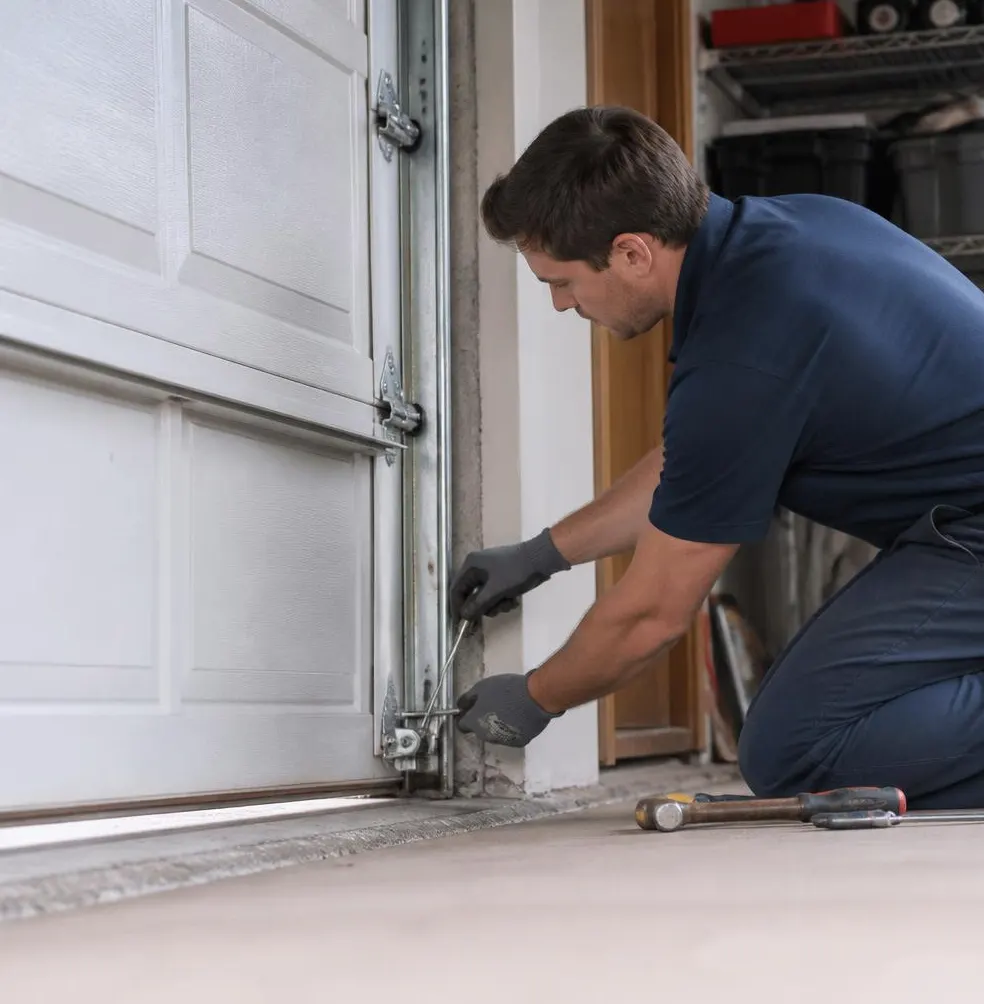
The Moment You Notice Something's Wrong
You pull into the driveway, hit the remote, and watch the door start to close—then stop a foot off the ground and reverse right back up. Or maybe it won't even try: you press the button and nothing happens except a small light blinking near the floor on one side of the garage. Either way, your first thought is probably that the opener is broken. More often, the real issue is a pair of small plastic sensors mounted about six inches off the ground on either side of the track.
What's Actually Going Wrong
Those two sensors—called photo-eyes—send an invisible beam across the bottom of the doorway. If something breaks that beam while the door is closing, the opener reverses the door immediately. It's a safety feature, not a glitch. But the sensors are sensitive, and a few common things can trip them or knock them out of alignment:
- Dirt, dust, or pollen film on the lens, which is common in Central Florida where humidity keeps a thin layer of grime sticking to everything in the garage.
- Spiderwebs or small debris crossing the beam path—garages with the door open during evening hours attract plenty of both.
- A bumped or bent bracket, often from a bike, lawnmower, or car bumper nudging the sensor arm out of true alignment.
- Direct sunlight hitting the receiving sensor at a low angle, which can wash out the beam the same way as a smudged lens.
- Moisture intrusion or light rust on the mounting brackets after a stretch of heavy afternoon storms, which can loosen the sensor's angle over time.
How Bad Can It Get
A misaligned or dirty photo-eye doesn't just mean an annoying reversal—it means the door's single most important safety check isn't working reliably. If the sensors are blocked, bypassed, or pointed in slightly different directions, the door may close on a car bumper, a pet, a child's bike, or a person walking through at the wrong moment without ever reversing. Given how much time garage doors in this area spend cycling—often several times a day with kids, pets, and vehicles moving through—a faulty safety reversal is one of the few garage door issues that can turn into a real injury, not just a repair bill.
How to Clean and Align Them Yourself
- Locate both sensors on the inside of the tracks, roughly six inches above the floor.
- Wipe each lens with a soft, dry cloth or microfiber towel. Avoid glass cleaner with ammonia, which can cloud the lens over time.
- Check the indicator lights. Most openers show a solid light on both sensors when aligned correctly, and a blinking or dark light on the one that's out of alignment or obstructed.
- Loosen the wing nut or mounting screw on the misaligned sensor just enough to nudge it gently until both lights go solid.
- Tighten the bracket and test the door through a full open-close cycle, waving a broom handle through the beam path to confirm it still reverses.
- Clear the area of any stored items, cords, or yard equipment that could sit in the beam's path, especially after rearranging the garage for hurricane season storage.
A Seasonal Note
With hurricane season still active into November, many Clermont-area homeowners are shifting generators, fuel cans, or extra storage bins into the garage. It's worth a quick check that none of this new clutter sits low enough to interrupt the sensor beam—that's a surprisingly common cause of sudden reversal complaints this time of year.
When Not to Bypass the Sensors
If the sensors are giving you trouble, it can be tempting to disconnect them, tape over the blinking light, or flip the opener into a setting that ignores them so the door will just close. Don't. This disables the one mechanism designed to stop the door from closing on a person, pet, or vehicle. It's also not a long-term fix—if the wiring, bracket, or lens is actually damaged, the problem will keep resurfacing, and now it's happening with no safety net at all. If cleaning and realignment don't resolve the blinking light, the sensor or its wiring likely needs to be replaced, not bypassed.
When to Call Clermont Garage Door Service
If you've cleaned the lenses, double-checked alignment, and the door still won't close reliably, it's time for a closer look. Bent brackets from a bumped car, corroded wiring from months of humidity, or a sensor that's simply failed internally all require hands-on diagnosis. As part of a Garage Door Tune-Up & Maintenance visit, we test and align both sensors, inspect the wiring for moisture damage, and make sure the whole safety reversal system is working the way it's supposed to. If the issue turns out to be electrical rather than mechanical, it sometimes overlaps with opener issues we handle through Garage Door Opener Installation and repair.
If your garage door in Clermont, Minneola, Groveland, or anywhere in South Lake County is reversing unexpectedly or won't close at all, don't keep testing your luck. Call Clermont Garage Door Service today and we'll get your photo-eye sensors aligned and your door working safely again.